Harvesting on forestry sites
Harvesting is the process of cutting down trees and extracting and transporting them from a forestry site. It can have adverse effects on the environment if not well managed.
This page gives a practical introduction to harvesting on forestry sites. It covers how harvesting works, what to plan for, and what good practice looks like. It doesn’t cover regulatory or health and safety requirements.
Why harvesting matters
Harvesting is one way a forest’s economic value is realised. It prepares the site for the next stage, such as replanting or changing land use. In some areas, harvesting manages risk, as leaving trees on eroding slopes can result in damage during storms.
When harvesting is well-planned and well-managed it:
- fells and processes trees in a safe and efficient manner
- reduces the risk of erosion on slopes
- reduces the risk of slash and sediment entering waterways
- supports safe and efficient operations
- reduces damage to roads and river crossings
- prepares the site for successful replanting.
Poor practice can result in injury or death to you or your forestry crew. It can lead to environmental damage and expensive repairs to infrastructure. This is especially true after heavy rain.
Get professional help with your harvesting
If you own a commercial forest, consider working with a professional forester or harvest manager when planning a harvest. If you do, make sure you have a written contract in place.
A professional can help you plan and manage the harvest. They can connect you with contractors for tasks such as roading, harvesting, and log transport.
Many forest and harvest managers have contracts and systems in place. These help manage health, safety, and environmental requirements for everyone onsite. Without these contracts, you take on more risk as a forest owner. Creating and managing multiple contracts yourself can be difficult and expensive.
You can find a registered forest professional through the New Zealand Institute of Forestry (NZIF).
Types of harvesting
You can harvest in different ways depending on forest size and your goals.
Clearfelling is the most used harvesting method. It involves harvesting all the trees in a single area at one time. This can range from moderate-sized areas to large continuous blocks.
Clearfelling is used because it’s:
- efficient and cost-effective
- allows for one-off replanting across a site
- simplifies operations and access planning.
However, clearfelling has drawbacks:
- It creates larger areas of exposed soil at one time. This can increase erosion and allow more sediment to enter waterways, which can harm aquatic ecosystems.
- It can generate large volumes of slash, which is the woody debris left after harvesting. If slash gets into waterways, it can move offsite and damage structures downstream.
Harvest operations must work to reduce the impacts of clearfell harvesting.
There are other forms of harvesting. For example, small coupe harvesting involves harvesting trees in small, defined areas. This method allows foresters to maintain the forest structure. This can provide some income from timber while supporting other goals like erosion control.
Harvesting process
Harvesting happens in a series of steps. Each step involves choices that depend on the site conditions and the risks you need to manage.
1. Felling trees
Trees are cut at the stump and directed to fall safely to the ground.
Manual felling is where foresters use chainsaws to fell trees. Foresters use manual felling on terrain that’s not accessible by machines. It’s often slower and more dangerous than mechanical felling.
Mechanical felling uses specialised machinery, such as feller bunchers, to cut and handle trees. It’s the most common harvesting method because it’s faster and safer than manual felling. Operators are protected inside the machine's cab. Mechanical felling works best on flatter or more accessible sites. However, the use of cable-tethered machines allows for mechanical felling on steeper terrain.
2. Moving trees to landings (extraction)
Trees are moved from where they are felled to a landing (a flat area of land).
Foresters use different extraction methods depending on terrain, site conditions, and environmental risks.
Ground-based harvesting uses machinery like skidders and forwarders to extract logs along the ground. It’s best suited to flat or rolling terrain. It provides a simple and cost-effective harvesting method.
Ground-based harvesting can disturb the soil surface. It may not be suitable for steep or erosion-prone sites. Operators should keep machinery away from waterways and manage runoff from extraction routes.
Cable harvesting uses cables to lift and move logs on steep slopes. It can cause less soil disturbance than some ground-based harvesting methods.
Cable harvesting is more complex to set up than other methods and needs suitable landing areas. It can concentrate disturbance around cable anchor points and landing sites. Operators may need to tidy these areas.
Helicopter harvesting uses helicopters to lift logs from the stump to a landing or transport point. This method is expensive. It’s only used for high-value timber on sites that are otherwise inaccessible.
Helicopter harvesting depends on suitable weather conditions. It needs careful planning and coordination.
3. Processing logs and transporting them offsite
At the landing, trees are processed into logs. A processor removes remaining branches and the treetop. The tree stem is then cut into logs. The branches and treetop should be stored in stable areas on the landing or elsewhere in the forestry block.
Foresters sort the logs into stacks based on their diameter, length, and quality. Different grades of logs are suitable for different products.
Loaders lift the sorted logs onto trucks. The trucks transport the logs through the forest road network to mills and ports.
You can read more about log grades and where harvested wood goes on the Ministry for Primary Industries (MPI) website.
Planning for harvesting
Plan your harvest well before work starts. Good planning helps you meet legal requirements, protect the environment, and get the best value from your forest.
Regulations
Under the National Environmental Standards for Commercial Forestry (NES-CF), you must prepare a harvesting plan. This plan needs to show how you will reduce the impacts of harvesting. This includes managing sediment and slash and preventing soil erosion after harvest.
Regional councils administer the NES-CF. Contact your council to find out the harvesting rules that apply to your site and whether you need resource consent for your harvest.
Planning harvest operations and logistics
A harvesting plan helps you carry out the work safely and efficiently. It should map the forest or woodlot and identify access issues before harvesting begins. Access issues can occur within a forestry block, such as steep slopes or wet ground, or on the way to the block, such as crossing public roads.
You need to consider how far the forest is from processing facilities. Careful planning is needed for transport, timing, and costs for all harvests. This is especially true for sites that are a long way from a mill or port.
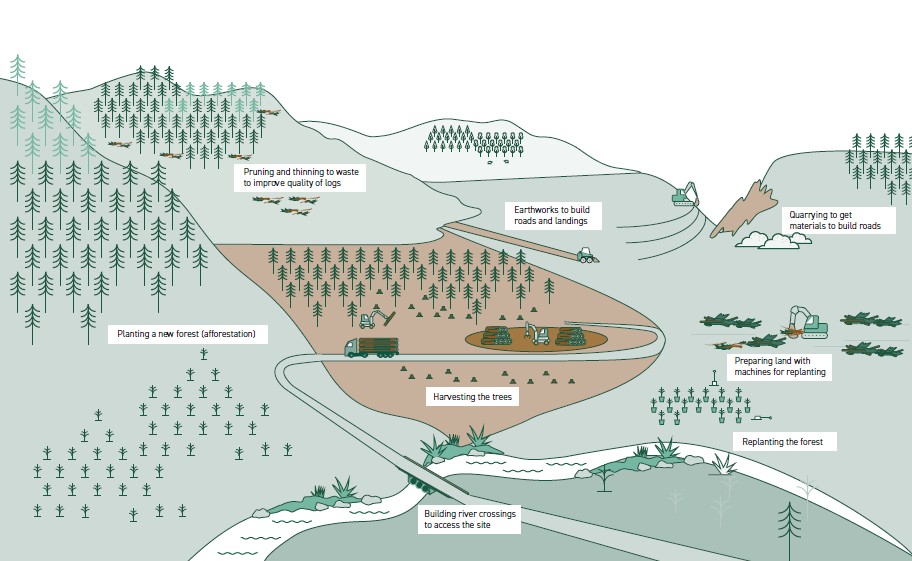
Successful harvesting depends on other forestry activities, such as earthworks, roading and river crossings. If these activities aren’t ready or up to standard, harvesting can be more difficult and cost more.
Every harvesting plan should be tailored to the site. Consider:
- slope and terrain
- soil type and erosion risk
- nearby waterways
- weather conditions and timing
- access routes and landing sites
- slash management methods.
Your plan should cover post-harvest site management. It should describe the desired condition of the site after harvest and how to stabilise disturbed areas.
Risks from harvesting
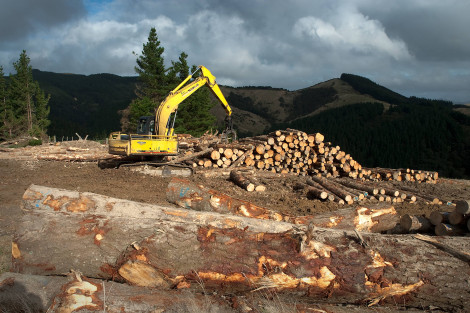
Harvesting is the highest-risk activity in forestry. It can affect both worker safety and the environment. Good planning and clear processes help reduce these risks.
Make health and safety a priority
If you own the land or the forest itself, you may have health and safety duties under the Health and Safety at Work Act 2015. Forest managers, harvest managers, and other contractors involved in the operation may also have duties.
The exact responsibilities will depend on the role each party plays and the level of control and influence they have over the work.
If you manage contractors yourself, be aware this is a significant responsibility. You need to understand and meet the health and safety requirements that apply to you.
Manage erosion and sediment
Harvesting exposes soil and can increase erosion and sediment risk, especially on steep land. To reduce these risks:
- minimise soil disturbance where possible
- plan extraction routes and landings carefully
- manage runoff so it does not flow directly into waterways
- stabilise disturbed areas as soon as practicable.
Stabilise slash
Slash is the woody debris left after harvesting, such as branches and treetops. It’s a normal part of forest operations, but it can cause problems if not well-managed. Slash can block waterways, damage downstream infrastructure, and accumulate on beaches.
Good practice includes placing slash on stable ground away from waterways or steep slopes. The aim is to prevent slash from moving – for example, getting washed downstream. After storms or heavy rain, stabilise slash piles that have moved. Remove accumulated slash from waterways and river crossings.
Protect waterways
Harvesting uses heavy machinery to fell and extract trees. These activities can damage waterways. Machinery can destabilise stream banks, increase runoff and sediment, and drop debris into waterways. To reduce these impacts:
- keep machinery out of waterways
- maintain setbacks from waterways
- use ditches, sediment traps, and other tools to manage runoff from roads and landings
- maintain river crossings.
When to harvest your trees
You need to time harvesting based on the forest’s age, market conditions, weather, and site access.
Forest age and market conditions
There’s some flexibility in when you harvest your forest. The “right time” depends on many factors. These include tree maturity, market conditions, and contractor availability.
Most radiata pine plantations are harvested when they are 25 to 30 years old. Choosing when to harvest is often a balance between value and risk. Harvesting too early can reduce the value of your logs. Waiting longer can increase the risk of damage from events such as windthrow or disease.
You may decide to delay or bring forward harvesting based on log prices and demand. Good timing can help maximise returns, but you should also factor in environmental and site risks.
Weather
Weather plays a major role in harvest timing. Harvesting in drier conditions is often preferred because it:
- improves access for machinery – for example, if vehicles need to cross paddocks
- reduces damage to infrastructure, such as gravel roads
- minimises soil disturbance, erosion and runoff.
That said, a little moisture can be useful to bind together dusty forestry roads.
You may need to pause harvesting during wet weather or before major storms. Monitor the weather forecast and allow extra time in your harvesting plan for bad weather.
After a major weather event, you’ll need time to check for damage, make sure access is safe, and clear debris around infrastructure.
Site access
You can only start harvesting once machinery can safely access your site. You may need to:
- build or upgrade roads and tracks
- construct or prepare landings
- install or upgrade river crossings.
On more complex or remote sites, preparing access can take significant time and planning. You usually need to prepare roads and river crossings in dry seasons before harvesting.
Working with the site after harvesting
After harvesting, the next steps are to clean up and stabilise the forestry block. You can then prepare it for its next land use.
Post-harvest clean-up
Agree on a post-harvest checklist or handover process with your harvesting contractor. Once harvesting is complete, inspect the harvest area, catchment, and access roads before contractors leave the site. Work together to make sure the site is in good condition:
- Place slash on stable ground and keep it away from waterways and steep slopes.
- Check that drainage systems, such as cut-off drains and culverts, are channelling water away from landings, roads, and gullies.
- Remove debris from around culverts, bridges, and other drainage paths so water can flow.
- Stabilise exposed soil on cutovers, landings, and banks – either with further earthworks or plantings.
- Repair any damage to fences, roads, and river crossings to maintain safe access for inspections and future work.
- Remove temporary structures and equipment that are no longer needed.
Readiness for replanting
A successful harvest sets up the site for its next use. If you’re replanting the site, this usually takes place in the next planting season, depending on site conditions and management decisions. Consider the following activities:
- Maintain or upgrade infrastructure, so it remains safe, stable, and fit for purpose – or decommission it.
- Prepare the block for planting by controlling weeds, excluding livestock, and ripping up compacted soil.
- Use lessons from the harvest to identify areas that are difficult, costly, or high-risk to harvest.
Harvesting common terminology
The New Zealand Forest Road Engineering Manual includes terms you may come across when planning a harvest.
Terms used in this article include:
- Clearfelling: A harvest technique where all the trees in a forest are harvested in one go.
- Coupe: A small section of forest set aside for harvesting.
- Cutover: An area of forest that has been logged or harvested, typically leaving behind stumps, slash and bare ground.
- Cut-off drains: Shallow channels cut across a road, track or firebreak to divert and control runoff.
- Landing: A flat area of land where logs or tree lengths are stacked, processed, and loaded onto trucks. Also called a pad or skid site.
- Slash: Branches, treetops, and other woody debris left over after a forest is felled and processed.
Harvesting guidance
The NZ Forest Road Engineering Manual covers construction basics for:
- roads, river crossings, and landings
- erosion, sediment and slash control structures.
MPI has published 2 handbooks on managing slash:
Safetree provides resources and programmes to help people run safe and successful forestry operations. Its resources include a series of videos on machine-assisted felling.
Harvesting is a regulated activity
Harvesting is a regulated activity under the NES‑CF.
This page does not explain regulatory requirements. For detailed rules and obligations, see the forestry regulations information on the MPI website.