Te Rūnanga o Koukourarata is restoring the health of te taiao by planting trees across its takiwā. Its work is connecting past, present, and future generations in caring for the land.
Background
Native forest and bird life once covered Koukourarata/Port Levy on Banks Peninsula. When European settlement began, the land was cleared for farming, with trees cut down and burned to create paddocks.
This clearance caused serious erosion problems from the late 1800s onwards. The erosion continues today. Sediment runs off the hills into streams and waterways, affecting water quality and the seabed.
The community at Koukourarata doesn't have a town water supply. They rely on rainwater for drinking, so clean streams and healthy water are essential for their wellbeing and day-to-day life.
How trees can help
Trees can protect and stabilise erosion-prone soils. This improves water quality by reducing runoff into waterways. Trees also create habitat for native birds and wildlife.
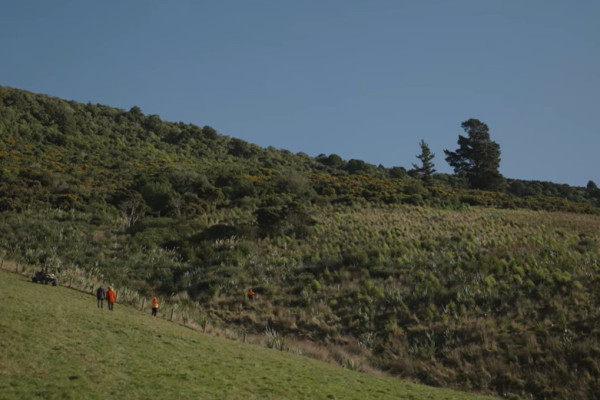
The people of Te Rūnanga o Koukourarata are now undertaking restoration work to heal their land. This includes planting native species and managing pests. The goal is to restore native forest across the area and improve water quality for current and future generations.
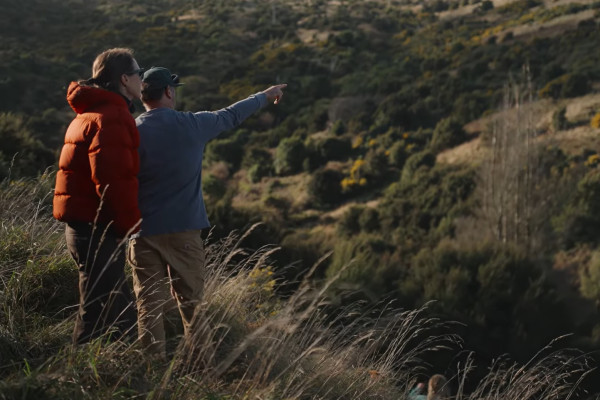
Carl Crofts, Projects Manager at Te Rūnanga o Koukourarata, leads its environmental mahi including climate change and restoration work.
"What we're currently doing is starting to do plantings – both native and exotics," Carl says. "It's aimed at erosion control and storm water control, which is all linked. For us, it's linked to water quality."
The approach
Te Rūnanga o Koukourarata spoke with kaumātua to learn which plants and trees grew in the area in the past. They also used research by Canterbury botanist, Dr Hugh Wilson, who studied vegetation on Banks Peninsula. This combined mātauranga Māori with scientific knowledge.
Choosing the right species
The rūnanga wanted to plant native species to restore the natural environment. But native trees take time to establish and grow, and the hills are eroding fast.
"We quickly realised the time it takes for those native species to take off," Carl explains. "Time's ticking, the hills are eroding, it's affecting our seabed."
So, they decided to use both native and exotic species. Fast-growing exotic trees can provide quick erosion control. Once the native species are well established, the exotics can be removed.
Managing pests
As plants and trees began to grow, the rūnanga discovered pests were starting to thrive. They ran a trial to understand what they needed to do to get pests under control.
The trial showed them that pest control needs dedicated time and resources. The rūnanga now employs someone full-time to manage pest control, native planting, and weed control.
Restoring Horomaka Island
The rūnanga is also working to restore Horomaka Island, a thin, rocky 400-metre-long island that stretches across the bay. The island provides important habitat for native birds like oystercatchers. Pest control on the island is helping bird populations to recover.
Ricco Robertson, Kaimahi Taiao at Te Rūnanga o Koukourarata, manages much of the hands-on restoration work. He sets traps, plants natives, and controls weeds.
"Kayaking over and seeing all those oystercatchers, baby chicks learning to fly, I think my [predator] traps are working – I think I’m doing a good job," Ricco says of his monitoring visits to the island.
"For our way of thinking, we don't think of short periods. It's inter-generational, so the work we do, we know it's that long-term work."
Carl
Passing knowledge to the next generation
The restoration work is connecting generations. The rūnanga involves young people like Ricco in the mahi, teaching them to care for the land.
Carl remembers when Ricco first joined them as a primary school student. Ten years later, Ricco returned to work in environmental restoration.
"I think with the younger generation, they're the key," Carl says. "For our way of thinking, we don't think of short periods. It's inter-generational, so the work we do, we know it's that long-term work."
Ricco, who’s been working at the rūnanga for just over a year, takes pride in his restoration work. Community members at rūnanga meetings are taking notice of his efforts.
“I get told almost every time that there’s a rūnanga meeting here: “Oh true bro, is it you doing all this mahi around here? And I’m like: “yeah, it’s me.” And they’re like: “oh, yeah, mean.” So, people are real proud, eh.”
He looks forward to one day showing his own children the trees he planted.
"I want to see them in 20 years and see what it looks like then, and I'll be like to my kids, 'me and your uncles planted them'," Ricco says.
Outcome
The community and its rangatahi are taking pride in the restoration work. They can already see the changes in the landscape and the return of native species.
This rūnanga’s project shows how combining mātauranga Māori with practical action can heal damaged landscapes. The work at Koukourarata offers a model for other communities wanting to restore the health of their whenua, awa and moana.
More information
For more information on Horomaka island and the surrounding bay, see the Department of Conservation web pages: